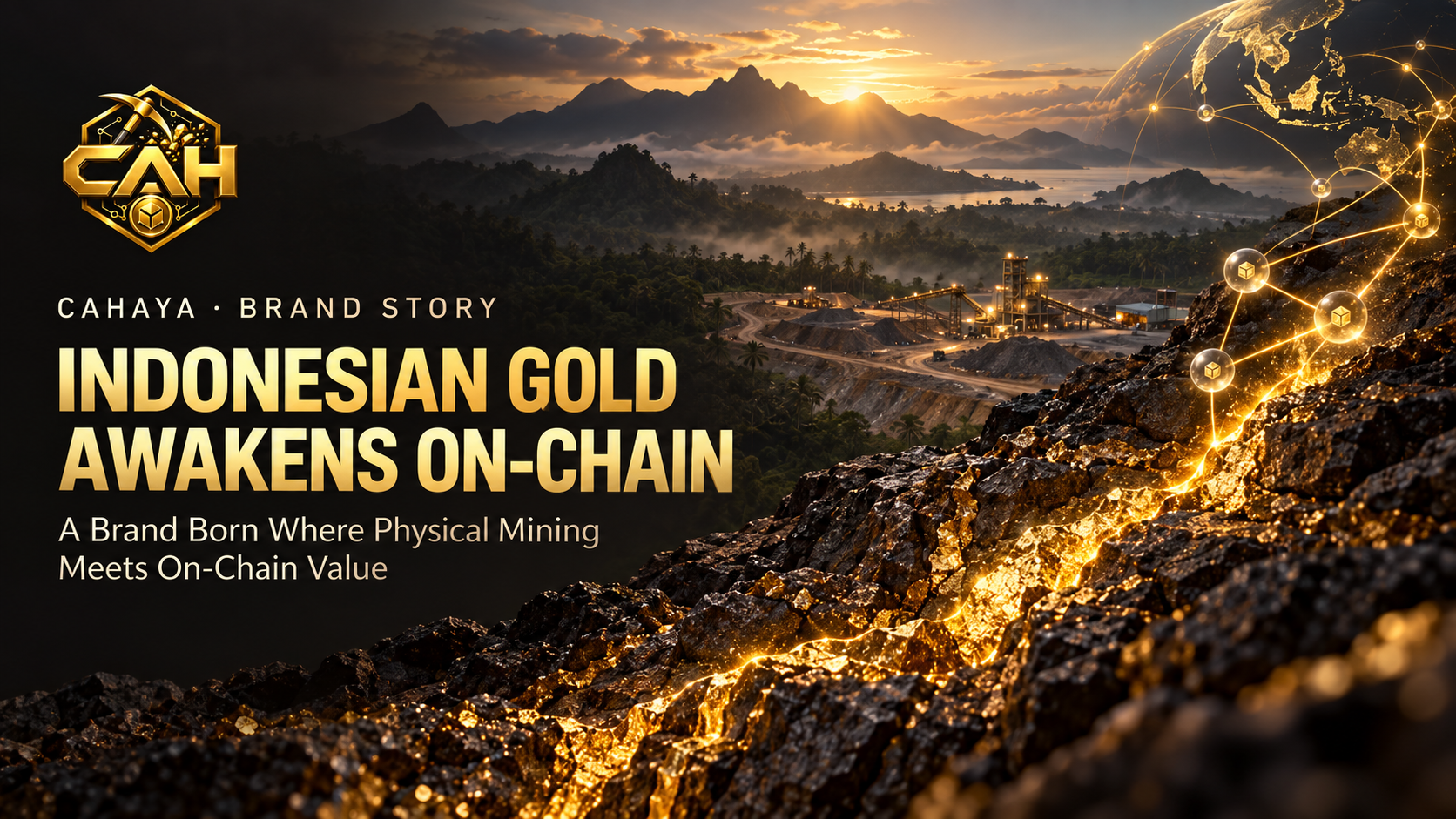
Introduction: Indonesian Gold Is Being Repriced
In September 2025, two things happened almost simultaneously.
Jardine C&C’s subsidiary acquired an Indonesian gold mining company for $693 million. In the same month, Indonesia’s Merdeka Gold Resources raised $280 million through an IPO on the Indonesia Stock Exchange to develop the Pani gold mine in northern Sulawesi—a deposit with estimated gold reserves of about 200 tonnes, one of the largest gold mines in Indonesia.
The deep integration of international capital and local mining is pushing Indonesia toward becoming the next global gold industry center.
Indonesia’s state-owned mining company ANTAM expects its gold sales to rise from 43 tonnes in 2024 to 45 tonnes in 2025. Global gold investment demand surged 84% in 2025, while mine supply grew only 1%. The rigid constraints on supply and the exponential expansion of demand are causing physical mining rights with continuous gold production capacity to be repriced by the market.
Against this macro backdrop, a gold brand from Indonesia—Cahaya—is quietly completing its migration from the mine to the chain.
I. he Foundation of the Brand—Why Indonesia, Why Cahaya
The trust in a brand is never built out of thin air.
The foundation of Cahaya’s brand comes first from the land beneath its feet.
Indonesia sits on the Pacific Ring of Fire and possesses extremely rich primary gold veins, making it a core gold-producing region in Southeast Asia. Leveraging the country’s extremely low labor and energy costs, the gold industry enjoys a 2-3x profit margin from mine extraction to terminal retail, along with a 30% wholesale-retail premium. This structural cost advantage is a competitive barrier that other gold-producing regions find difficult to replicate.
Cahaya is rooted in the Indonesian core mining enterprise PT. CAHAYA SELATAN GEMULANG, holding a 5,000-hectare legal mining area and a 30-year compliant mining permit. The mine owner has been deeply engaged in Indonesian gold mining for more than twenty years, starting from a small placer gold mine and gradually expanding it into a modern mining operation with a complete processing and smelting flow.
Currently, the mine produces approximately 20 kg of physical gold per day and has planned to advance toward 50 to 100 kg per day. The mining rights are legally issued by the Indonesian government and can be verified by third-party due diligence at any time. After gold is produced, it goes through refining, warehousing, and sales—each batch has smelting plant delivery records, refinery warehousing documents, and sales contracts available for verification.
These are the “anchors” of Cahaya’s brand assets.
They do not rely on narrative, consensus, or market sentiment. They rely on the gold that truly exists underground and the legal mining permits issued by the Indonesian government.
The first source of brand trust is always “verifiable facts.”
II. The Brand Positioning—The Intersection of Mining DNA and On-Chain Ecosystem
In the global landscape of gold RWA, Cahaya’s brand identity is unique.
It is not a traditional mining company. Traditional miners rely on bank credit, private equity, or capital market IPOs for financing—high thresholds, long cycles, and poor liquidity. Cahaya has chosen a different path—fragmenting the value of mining rights and opening it to the world through on-chain tokens.
It is also not a pure crypto project. Most RWA projects start from “asset tokenization” and look for underlying assets to map. Cahaya does the opposite—it starts from a physical mine and looks for a way to express it on-chain.
This determines Cahaya’s brand positioning: an on-chain brand vehicle for physical gold production capacity.
This positioning means two things.
First, Cahaya’s brand value comes primarily from the physical side. A 5,000-hectare mining area, a 30-year mining permit, 20 kg of gold per day, and a 2-3x industrial profit margin—these are the underlying supports of the brand assets. Without them, the on-chain ecosystem would be a castle in the air.
Second, Cahaya’s brand extension comes from the on-chain side. Through RWA fragmentation, mining rights investments that traditionally required tens of millions of dollars are broken down into divisible digital assets. Anyone in the world, regardless of location or capital size, can participate in the industrial revenue distribution of an Indonesian gold mine with a low threshold. 24/7 trading, global instant settlement, programmable and divisible—these are the circulation advantages of the brand assets.
Between a “mining company” and a “digital asset platform,” Cahaya occupies a unique position. It is neither an on-chain version of a traditional miner nor a mining story packaged as a crypto project. It is an independent brand species—using the cash flow of a physical gold vein to support the long-term value of on-chain assets.
III. The Brand Mission—Letting Indonesian Gold Production Capacity Meet Global On-Chain Capital
The long-term value of a brand does not depend on what story it tells, but on what certainty it represents.
What certainty does Cahaya represent?
It is the connection between “Indonesian gold production capacity” and “global on-chain capital.”
What global investors desire is an asset that has physical backing, can continuously generate yield, and can circulate freely. Physical gold offers “physical backing” but cannot generate yield and is inefficient in circulation. Gold ETFs offer “circulation convenience” but have no physical backing and no yield generation. Most existing RWA projects cannot even pass the “real backing” test.
Indonesia, as a gold treasure trove on the Pacific Ring of Fire, possesses scarce resources that global capital is chasing. The intensive layout of international capital in 2025 has already proven that Indonesian gold mining is becoming an important pole in global asset allocation.
Cahaya’s brand mission is to become the synonym for this connection.
When global investors want to allocate to Indonesian gold, what is the first name they think of? When Indonesian miners want to access the on-chain ecosystem, what is the first platform they think of? When the RWA sector discusses “production assets,” what is the first sample cited?
The answers to these questions are the source of Cahaya’s long-term brand value.
Brand building is not a one-time action but a continuous accumulation. Cahaya’s mining permit extends to 2050, meaning the brand-building cycle is not three to five years but thirty years. Over these thirty years, the mine will continue to produce gold, gold operations will generate cash flow, and profits will continue to flow back into the ecosystem. Each cycle strengthens the asset support, and each cycle reinforces brand trust.
The roots of the brand are in the ground, so the tree can grow into the sky.
Conclusion: The Starting Point of a Brand
Back to that morning in Sulawesi.
Ore is lifted to the surface, crushers roar, conveyor belts run. By dusk, gold bars are sealed, weighed, and stored.
The same scene repeats every day at this mine, and has repeated for more than twenty years.
But this time, the gold has a new destination. It is no longer just melted into bars, stored in vaults, and traded by a few. Its value is now flowing through Cahaya to the wallets of ordinary people around the world.
This is the origin of the Cahaya brand—not a creation from zero to one, but a migration from underground to on-chain.
The “on-chain awakening” of Indonesia’s gold mining is happening. And Cahaya is becoming a name that cannot be ignored in this process.
Cahaya is an RWA ecosystem extending Indonesia’s physical gold mining industry into Web3. CAH is the core digital token that carries the value of its gold assets.
Website:https://cahaya-mine.com
